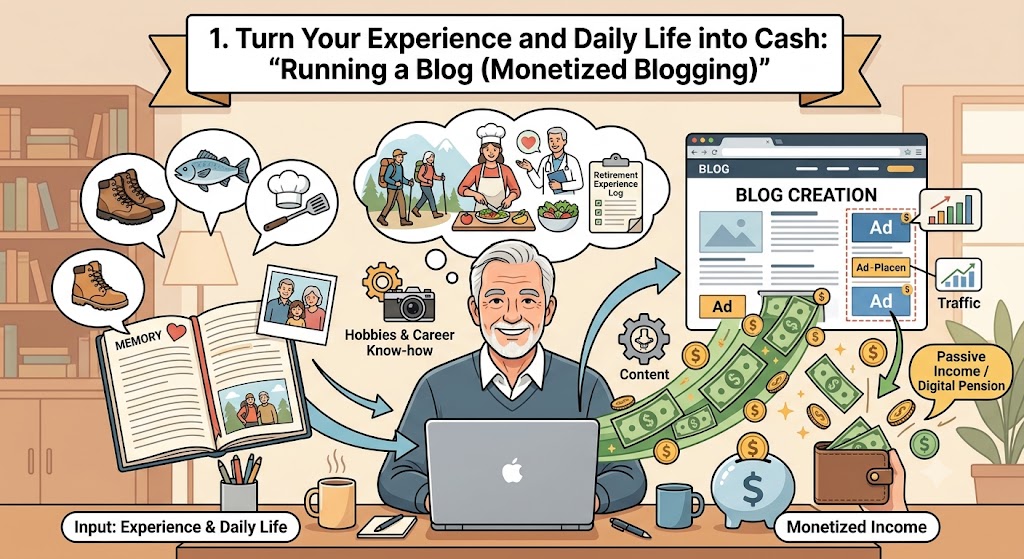
Blogging and AdSense as an Income System
Mara: The central question here is whether writing online can actually function as stable, recurring income — and the post on making money online for free argues it can, with a specific structure in mind.
Pip: The framing is deliberately unglamorous, which is what makes it useful. The post describes AdSense as farming: “you are planting seeds in fertile soil, watering them, and waiting for the harvest.”
Mara: That metaphor carries real weight. The upshot is that the first month or two will likely produce almost nothing — the post says you might “work your tail off only to make a few dollars” — but a library of fifty to two hundred posts eventually generates revenue around the clock.
Pip: And the roadmap to get there is four steps: pick a platform, build fifteen to twenty posts, pass what bloggers call the AdSense exam, then optimize for revenue. The exam framing is apt — Google’s review bots are strict enough that the community named it.
Mara: The approval rules are specific. One blog, one topic. Posts at fifteen hundred to two thousand words minimum. No copy-pasting, ever. Professional grammar so Google’s crawlers can parse the structure cleanly.
Pip: The keyword strategy is where the money gap gets stark. A finance or insurance post can earn as much from one or two clicks as a lifestyle post earns from a hundred.
Mara: The post on four best ways to make money online reinforces this from a different angle — it’s aimed at retirees and frames blogging as a “pension-like income,” with affiliate marketing through Coupang Partners as a zero-capital complement. The Korean-language post on making money online covers the same AdSense roadmap for a domestic audience, including the platform choice between Tistory and WordPress.
Pip: The ad placement advice is worth noting too — manual top ad under the title, auto ads in the middle. Statistically the highest click-through position, and it keeps the reading experience intact rather than fragmenting it.
Mara: The consistent thread across all three is patience. None of them promise fast returns. They promise a system that compounds if you don’t quit.
Pip: From ad revenue on your own blog, it’s a short step to asking what happens when you move that content onto social platforms.
Social Platforms as Revenue Channels
Mara: The post on four ways to generate income through social media makes the case that you no longer need a massive following to earn meaningfully — strategy matters more than scale.
Pip: The key line is this: “with a clear strategy, anyone can create meaningful income” — and the post means it structurally, not motivationally.
Mara: So the four channels are affiliate marketing through platform links, brand sponsorships from micro-influencers with one thousand to five thousand followers, selling digital products like e-books and templates, and platform-native creator revenue from YouTube, TikTok, and Instagram Reels. The creator revenue piece has expanded well beyond YouTube’s partner program now.
Pip: Micro-influencer sponsorships are the part that surprises people — brands are actively preferring smaller, targeted accounts because conversion rates are better than with mega-influencers.
Mara: Which connects directly back to the blogging work. Social reach amplifies a blog’s traffic; a blog gives social content somewhere to land with monetization attached.
Pip: The side hustles post takes that same toolkit and asks who else it applies to.
Side Hustles Beyond the Blog
Mara: The post on four internet income methods frames online earning as retirement preparation — the core argument is that “the internet has no age limits and no mandatory retirement age.”
Pip: That’s a genuinely useful reframe. The barrier isn’t technical skill; it’s the assumption that this stuff is for younger people.
Mara: The four methods map closely to what we’ve already covered — blogging, affiliate marketing, e-books, and YouTube — but the post on after-work side hustles for salaried workers adds a fifth: AI-assisted short-form video, using tools like ChatGPT for scripting and free editors to produce daily content without showing your face.
Pip: The Hello World post, meanwhile, is the site’s own origin point — the first step in exactly the kind of blogging journey all these posts are describing.
Mara: And the post on various income streams reinforces the mindset piece: start with zero-risk options, avoid anything requiring upfront fees, and treat the first six months as seed-planting rather than harvest time.
Pip: The through-line across all of this is that the tools are genuinely accessible — the barrier is mostly patience with a slow compounding curve.
Mara: And the AI angle keeps surfacing, whether it’s Google’s crawlers deciding your content’s value or ChatGPT shortcutting video production. Next time, worth asking how much of the “work” in this system AI is already doing.
 Profiting in the age of AI
Leave a comment